
















Netanyahu gets Israel cabinet’s nod to respond to Hezbollah rocket strike
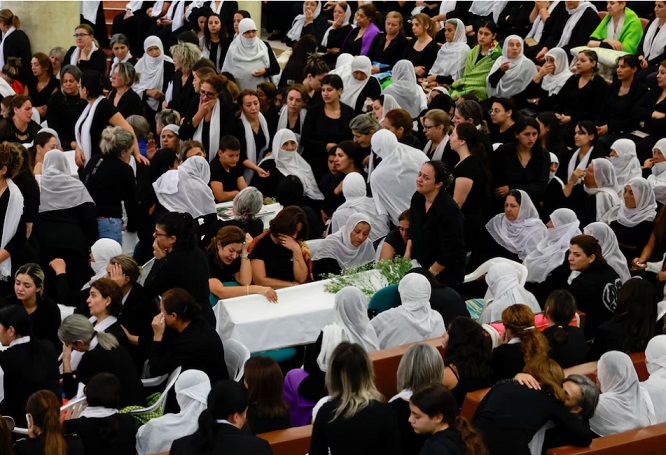
In the wake of a tragic rocket strike that killed 12 children and teenagers in the Druze village of Majdal Shams, located in the Israeli-occupied Golan Heights, Israel’s security cabinet convened to discuss an appropriate response.
The attack, which occurred on Saturday, has been attributed by both Israel and the United States to Hezbollah, a Lebanese militant group. Despite this attribution, Hezbollah has denied responsibility for the incident.
Israel’s security cabinet on Sunday authorized Prime Minister Benjamin Netanyahu’s government to decide on the “manner and timing” of a response to a rocket strike in the Israeli-occupied Golan Heights that killed 12 teenagers and children, and which Israel and the United States blamed on Lebanese armed group Hezbollah.
Hezbollah denied responsibility for the attack on Majdal Shams on Saturday, the deadliest in Israel or Israeli-annexed territory since Palestinian militant group Hamas’ Oct. 7 assault sparked the war in Gaza. That conflict has spread to several fronts and risks spilling into a wider regional conflict.
READ ALSO: Hezbollah rocket kills 12 at football ground, Israel says
Israel has vowed retaliation against Hezbollah in Lebanon, and Israeli jets hit targets in southern Lebanon during the day on Sunday.
But there were expectations a stronger response could follow the security cabinet meeting convened by Netanyahu in Tel Aviv.
The United States has expressed strong support for Israel, with officials stating that they are working closely with both Israeli and Lebanese counterparts to prevent further escalation. U.S. Secretary of State Antony Blinken emphasized that Washington does not wish for the conflict to escalate beyond its current state, highlighting concerns about regional stability.
Other nations have also voiced apprehensions regarding potential escalation. Egypt warned that continued violence could lead to a comprehensive regional war, while British officials echoed similar sentiments about avoiding further conflict.
Israel says rocket Iranian-made
However, Israel said the rocket was an Iranian-made missile fired from an area north of the village of Chebaa in southern Lebanon, placing the blame squarely on Iranian-backed Hezbollah.
It was not immediately clear if the children and teenagers killed were Israeli citizens.
“The rocket that murdered our boys and girls was an Iranian rocket and Hezbollah is the only terror organization which has those in its arsenal,” Israel’s foreign ministry said.
Two security sources told Reuters that Hezbollah was on high alert and had cleared some key sites in both Lebanon’s south and the eastern Bekaa Valley in case of an Israeli attack.
Lebanon’s Middle East Airlines said it was delaying the arrival of some flights from Sunday night to Monday morning, without stating why.
Israeli forces have been exchanging fire for months with Hezbollah fighters in southern Lebanon, but both sides have appeared to be avoiding an escalation that could lead to all-out war, potentially dragging in other powers including the United States and Iran.
However, Saturday’s strike threatened to tip the standoff into a more dangerous phase. United Nations officials urged maximum restraint from both sides, warning that escalation could “engulf the entire region in a catastrophe beyond belief.”
Lebanon has asked the U.S to urge restraint by Israel, Lebanon’s foreign minister, Abdallah Bou Habib, told Reuters. Bou Habib said the U.S. had asked Lebanon’s government to pass on a message to Hezbollah to show restraint as well.