















SEC urges govt-owned enterprises to list on Nigerian Exchange
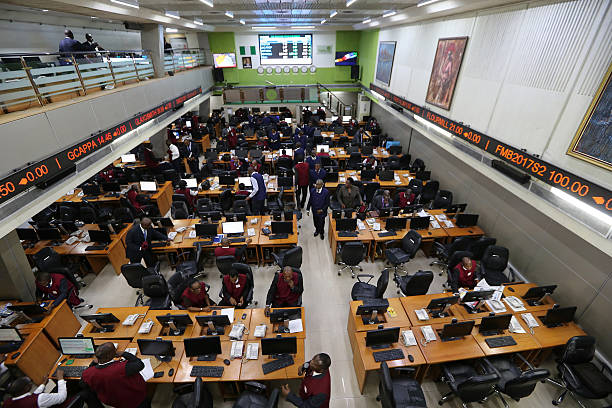
Nigeria’s Securities and Exchange Commission (SEC) has urged Government-Owned Enterprises (GOEs) to list on the Nigerian Exchange Limited (NGX).
The SEC Director General, Dr. Emomotimi Agama, in a statement by the Commission in Abuja on Thursday, said that the listing of GOEs would promote democratization, inclusiveness, and wealth creation for Nigerians.
‘‘Inclusivity is crucial because it fosters ownership. Together, we can build our industries and country,” Agama said.
He emphasized that the SEC would offer incentives to encourage GOEs to list their securities.
He further stated: “Aside from the incentives, the SEC will also educate those managing these institutions to understand that listing does not diminish their control. Instead, it empowers them by creating unity, as ‘united we stand, divided we fall.”
READ ALSO: Africa Women Forum announces finalists for 2024 AWIEF Awards
Agama noted that the Commission would continue providing education and incentives while streamlining the time to market for companies.
“By reducing the time to market and offering certainty and support, we ensure that once a company decides to list, it can follow a reliable timeline supported by the SEC,” he added.
He said the SEC is also leveraging technology to drive inclusion in the capital market, particularly to attract younger investors.
What SEC does
Regulation
In regulating the market, the Commission undertakes the following activities in order to protect investors, market operators and also ensure market integrity. Regulation is carried out through deployment of the following tools:
- Registration of securities and market intermediaries to ensure that only fit and proper persons / institutions are allowed to operate in the market. Instruments and persons registered in the market are:
- Securities/Commodity Exchanges/Capital Trade Points
- Futures, Options and Derivatives Exchanges
- Depository, Clearing and Settlement agencies
- Capital Market Operators:
- Issuing Houses
- Securities dealers/Stock brokers/Sub- brokers
- Registrars/Transfer agents
- Trustees
- Reporting Accountants
- Solicitors
- Investment Advisers etc.
- Securities:
- Equities
- Debentures
- Debt instruments
- Collective investment schemes
- Inspection either done “onsite” or “off-site”. The Commission, at regular intervals, calls for information from capital market operators. It also undertakes and conducts inquiries and audits of any participant in the market whenever necessary.
- Surveillance is carried out over exchanges and trading systems to forestall breaches of market rules as well as deter and detect manipulations and trading practices which are capable of causing market disruption.
- Investigation of alleged breaches of the laws and regulations governing the capital market and enforcement of sanctions where appropriate.
- Enforcement actions are taken against market operators who are found wanting after investigation is carried out, in minor cases, an all parties meeting is convened by the Commission where it mediates between parties involved in a dispute. However, if the case is serious or where no resolution is reached or a party fails to comply with a directive given at the all parties meeting, the defaulting party will be called before the Administrative Proceedings Committee (APC), which is a quasi judicial court, with only civil jurisdiction. Appeals against decisions of the APC are usually made at the Investment and Securities Tribunal (IST). Enforcement action may be in the form of payment of fine, ban, suspension or even forwarding the case to the Nigeria Police Force (NPF), Economic and Financial Crimes Commission (EFCC) or the Attorney – General of the Federation (AGF) where allegations are found to be criminal in nature.
- Rule making by the Commission as developments occur. This is to ensure that the Commission meets up with international best practices.