













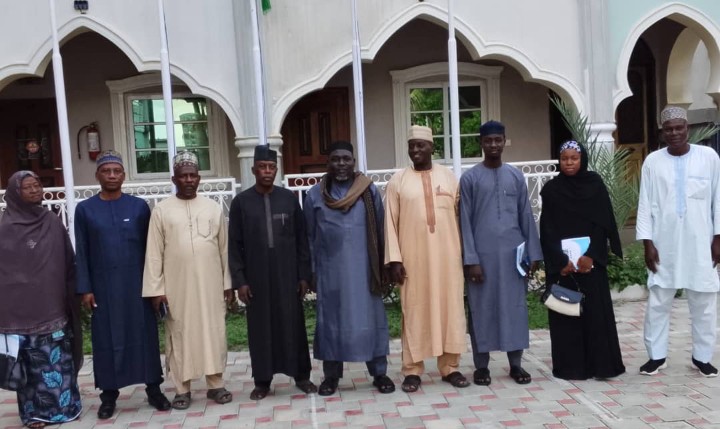
Sani Jogana emerges chairman as Kano NAPPCOE elects interim officers
In a move to strengthen the leadership and strategic direction of private teacher training institutions in Kano State, the National Association of Proprietors of Private Colleges of Education (NAPPCOE) has elected a new interim executive committee to pilot its affairs for the next two years.
The development was confirmed in a statement released by the association’s Head of Media, Ado Salisu, following NAPPCOE’s inaugural meeting held in the Kano state capital.
During the meeting, Alhaji Sani Yusuf Jogana emerged as the interim chairman unopposed. He will lead the executive team alongside Hajia Hauwa’u Sani, who was elected vice chairman, and Professor Abubakar Abdullahi Bichi, who takes on the role of secretary.
READ ALSO: The Value-Chain Imperative: Making CEPA Work for Nigerian Manufacturing
Other key officers elected to the interim executive council include:
Treasurer: Hajia Bilkisu Abdullahi Turaki
Legal Adviser: Barrister Yusuf Abdullahi
Public Relations Officer: Bilal Aliyu Musa
Head of Media: Ado Salisu
Delivering his acceptance speech shortly after the election, Jogana emphasized that all hands must be on deck to drive educational progress across Kano State and the nation. He called on all members to offer their full support and actively collaborate with the Kano State Government under Governor Abba Kabir Yusuf.
Jogana pointed out that Kano State faces a substantial gap in meeting the growing public demand for quality education. He stressed that private institutions must work shoulder-to-shoulder with the current administration to expand access and elevate educational standards statewide.
Earlier during the meeting, the proprietor of Almustapha College of Education, Professor Abubakar Abdullahi Bichi, welcomed members and charged private college owners to remain committed to raising academic standards across the region.
Reinforcing that message, the proprietor of Dala College of Education, Alhaji Aliyu Musa, described the association as a vital engine for societal development. He noted that developing the education sector requires shared responsibility, as government resources alone cannot bear the full weight of the sector’s expanding needs.